Discrimination Series Part 1: Waking Up
This is the first installment of the Discrimination Series. If you’d rather listen, this content is also available on The Nativist Podcast: Episode 36: Discrimination Series Part 1: Waking Up.
I was talking to a friend and had an epiphany: I’ll call it the school of life analogy. Whether we accept each other or not, we are all members of one giant group: humans. Together, WE are SOCIETY. I believe with that comes inherent responsibilities: to act in the common good, to look out for one another, and to pull our weight by contributing to our collective welfare. Sure, we often have wildly differing ideas of how to execute those duties, or whether those duties even exist. And if you’ve ever done a group project, you know: just because there are assignments doesn’t mean everyone will pitch in. Work distribution is usually uneven, with some carrying the group, some doing the bare minimum, and some just checking out entirely - with variations in between. And as is typical with school, we all have other classes/lessons/assignments, for our own personal development. We have our own goals/sub goals. We belong to subgroups, participate in extracurriculars. We have different home lives - often including complicating factors: poverty/abuse/unstable relationships/health issues/aptitudes/etc. These all impact our school performance. The good news is: I believe our head teacher (I know this is a point of debate) knows and considers all of these factors when assigning the grade (or maybe we don’t even get graded - another convo for another day). But let’s ask ourselves: If the particular group assignment was, say, racism, where would you fall on the group contribution spectrum?
I for one know I could step it up. Yes, I’m acutely aware - and have been for most of my life - of pervasive and persistent racism and discrimination. Yes, I continually research and educate myself on the topic. Seek perspectives. Self reflect and ask myself hard questions. Consider the micro and macro pictures/factors. Express outrage and disgust when talking to others. But if I’m honest with myself…that’s the bare minimum. I can - and will - do more. It’s not enough to be privately anti-racist. Clearly, that hasn’t moved the needle enough. We must be publicly and actively anti-racist. If you’re unsure of how I go about that, you’re in the right place. Come with me as we dive into this, by asking questions, considering views, sharing resources, and assessing possibilities. Follow along on this account/my blog/podcast. Human power. ✊✊🏻✊🏼✊🏽✊🏾✊🏿

I know it can feel heavy/overwhelming to wade into the ugly of the world. There’s a lot of shit that happens in the world. Injustices/tragedy/etc. It’s not an upper. Trust me - I get it. I often see the worst of the worst through my job, and often try to offset it by limiting (NOT eliminating!) my exposure and by watching/reading lighter fare (feel-good movies, rom coms, comedies - you get it).

Think of the lingering effects of oppression. This applies to so many. Let’s focus on Native Americans and blacks. We created the problems and set the trajectory, then told them to take personal responsibility and get over it. We stole their land, stole their bodies and dignity, ripped them from their home and displaced them, etc. We subjected them to horror after horror (separated families, intentionally infected them with smallpox via blankets - yeah, awful stuff).
It’s the ugly truth.
We traumatized them in unspeakable ways, and trauma like that doesn’t just disappear on command, with the snap of your fingers. It lingers. It perpetuates. It ripples out to future generations. It generates substance abuse, violence, debilitating mental health issues. It affects socioeconomic status. It ignites vicious cycles. Think of your own emotional baggage from childhood - we pretty much all have had it, even if our parents were loving and wonderful. Now add another 100lbs to that baggage. See? Past actions set these people on a certain trajectory. Yes, they can overcome it. Yes, we should own our lives and not play the victim. But COME ON - let’s be aware and empathetic and realistic. This analogy might help put it in perspective.

Human Race Analogy
Let’s say there’s a race - a human race if you will (man, my puns and analogies just won’t stop). At the start of the race, far before the finish line, someone dug a mile-deep hole, dumped you and a few others in without a ladder or obvious/easy means of escape, then told you to stop feeling sorry for yourself and perpetuating your condition, and get the heck out. Your numbers end up multiplying, and you do your damndest to escape the hole via various strategies: pooling resources, muscling your way out, innovating new methods, etc. Meanwhile, the oppressors from above constantly douse you with water, or throw things at you. Some of you do make it out, by sheer luck/will/resilience/cleverness/etc. Some die trying. Some make it to the top - only to be shoved back again. A few actually make it over the “finish line.”

In any outcome - is it a fair race? Is it fair to be judged on par with those who didn’t have a giant abyss to escape, even if they had their own obstacles? Is it fair to be told you just didn’t try hard enough? You’re just not competent enough, or smart enough? To quit whining - we all have our difficulties? We all have to work to cross the finish line? Just like with race and white privilege (and sex/male privilege!), just because you don’t have that advantage doesn’t mean your accomplishments are diminished or your life isn’t easy. Maybe you have a sprained ankle, no legs, no sight, etc. It just means that a certain element of your life (eg race/sex) wasn’t making it hard.

We can still celebrate each other’s wins...but why not lend a helping hand? There are no race rules saying we can’t build a giant ladder and stick it into the abyss, to help others up, or block others from impeding others. We can share our water/food/tips/other resources with our fellow racers.
Some racers have the advantage of premium personal coaching. Some have the best gear, and obsessively train/study to optimize performance and finish first. Some prefer to go it alone, while others take a more social approach and join running groups. Some loathe running and would rather lift weights, or play. Some alternate walking and running, some only walk. Some crawl. Some backtrack. Some are more interested in pre-gaming/tailgating. Some are consumed busy helping/carrying others. Some stop short of the finish line, doubting their worthiness/readiness to finish. Possibly fearing/dreading the accompanying pressure/recognition/responsibility. Some feel more comfortable working and disciplining themselves, and circle back to run it again.

There are many different causes/individuals needing our help. We can’t do it all. We can’t physically/emotionally carry/support them all, simultaneously/continually. We also have to care for ourselves. But we can pull our weight. Do our part. Work together. Leverage skills/resources.
Can we really feel good about a race that is so glaringly uneven and unfair? Where’s our collective sense of duty and compassion? And if the race is timed (ie lifetime) and we don’t cross the finish line (what even is the finish line?), does that mean our lives/accomplishments were any less valuable/respectable? What if they were more so? What if individual “finishes” and “wins” didn’t count? What if the true objective/way to win was to cross collectively? To level the playing field and help others so we could all finish?
Again, what is winning? What is success? Man, this just got really deep. But it’s a crucial question to ask ourselves. What does success mean to me? What am I willing to do/sacrifice? What motivates me? Am I so focused on my lane/pace that I don’t notice another’s struggle? Am I willing to show my “progress” to help them? Am I comparing myself to others? Am I competing with myself?
Have you ever been mistreated and held a grudge? Even if you forgave the person, immediately or eventually, you likely didn’t forget, right? Imagine if that person had done something egregious, on a large scale: against your family. They stole your family’s home and belongings, leaving you homeless and destitute. When you sought recourse, the police said that’s the way it is.

Unfortunately, people commonly don’t care unless it directly affects them. So, ask yourself what you would do if your loved one were a casualty (literally or figuratively) of the system? Of systemic discrimination? Honesty is crucial here.
As we have these hard but essential and long-overdue conversations, let’s check our egos. Realize it’s a raw, inflammatory topic, with deep wounds. We’ll likely say the wrong thing. Misunderstand and be misunderstood. Be regarded as our race’s representatives, and get taken to task and held accountable for that race’s past and present injustices. We’ll likely be led to confront our own biases and missteps, and contribution (even if unintentional) to those injustices.
But it’s not about us. So let’s remember the big picture and transcend our ego. These are necessary steps on the path to healing and change - and pale in comparison to the “discomfort” and pain and sorrow - much of which has been building for many, many years and generations. When pressure is finally released, it’s rarely “clean” and “precise” and fit to preference/comfort. After all the ugliness and tragedy and disrespect so many have endured and are enduring, the very least we could do is feel temporary discomfort, and suspend our personal feelings while we learn about what’s been done and what needs to be done. So let’s lean into humility and love, and prioritize the highest good.
Wherever you are on the “woke” spectrum (I included this emotional guidance scale as a guide), what matters most is you keep learning, keep growing, keep engaging, keep moving forward, keep caring. Some days you’ll be all lit up and ready to go, and some days you’ll feel nearly extinguished. But please - do what you must to keep that flame alive. The world needs you. Not to save it by yourself, but to join forces as we save it together.
We must keep raising awareness, in ourselves and others.

I used to say - and mean! - it’s really hard to offend me.
Well, that luxury is long gone. I’m offended. Too much has gone on and is going on. For far too long (like...hundreds of years too long).
As you may know, I’m committed to being apolitical. But some issues extend beyond politics + partisanship + are simply about humanity.
I hope we can all agree on the fact that discrimination exists (remember this later). If you disagree, let me catch you up to speed: it does, in various forms: against race/sex/religion/sexual orientation/etc. It’s not necessarily about one’s personal beliefs - it’s about whether those beliefs harm/impact another.
Addressing these issues can be tricky. I recognize it can feel like people misperceive/dramatize/inflate certain examples or situations. Seeing problems where there aren’t any. You may feel like people make a mountain out of a molehill, or turn a non-issue into an issue.
The truth is...if we feel like that, that’s exactly when we need to check ourselves, because that almost always indicates privilege. I know privilege can be an inflammatory, triggering word.
Please hear me out. Remember how it’s generally accepted discrimination exists, in various forms? That’s the bottom line, our tether, our unifying thread. Home base. It’s where we return if we feel frustrated with others who disagree on how/where/when/why discrimination manifests. Because there are a LOT of different views there. If you’re discussing this with others, you’ll pretty much inevitably be called/regarded as too sensitive/contentious/ignorant/etc. Touchy subject, amIRite?
But please - if you’re not offended/disturbed by all that’s going on - that’s a neon sign. Please - ask yourself why.
PLEASE know I still value + prioritize holding space for everyone to express themselves + their views. That’s how true connection + understanding + transformation happens - on ALL sides.
Hearing others. Learning from others. Keeping your eyes + mind + heart open.
But also letting the highest good for ALL be your North Star and guiding light. Staying grounded in that objective.
Thank you for reading. Thank you for caring.
x,
w
C U R I O U S
Images by Brooke Richardson Photography
“The future belongs to the curious. The ones who are not afraid to try it, explore it, poke at it, question it, and turn it inside out.”
Curiosity is a superpower.
“More than intelligence or persistence or connections, curiosity has allowed me to live the life I wanted.”
It opens doors, keeps you engaged, keeps you learning, keeps you growing, keeps you evolving…
I personally have an INSATIABLE curiosity. The more I learn, the more I want to learn. And the more I know, the more I realize I don’t know! (It’s a total kick in the pants)
“Curiosity about life in all of its aspects, I think, is still the secret of great creative people.”
Curiosity manifests in multiple ways: reading, asking, exploring, experimenting.
I read basically anything I can get my hands on, usually nonfiction (though fiction can be just as insightful!). The topics I read about range from international relations to economics to finance to psychology to history to spiritual enlightenment to personal development to health/fitness to government/politics to leadership to business to…yeah, you get the idea. The more you do it, the more fun it becomes - you start making connections not only in your current reading, but in other areas: past readings, past experiences, current experiences, current situations.
The world starts to come together and make more sense (note I said more sense, not complete sense! There will always be mysteries and unknowns - part of the ride, my friend).
“Wonder is the beginning of wisdom.”
Not only do you start to see how things fit together, but you are better equipped to make wiser decisions: with your money, your career, your personal life. Knowledge is P O W E R, baby.
And if reading isn’t enjoyable/feasible for you, then try podcasts and audiobooks! After you’re all caught up on The Nativist Podcast (shameless plug!), there are countless fantastic and informational podcasts out there in practically every genre/format/vibe imaginable.
“I have no special talents. I am just passionately curious.”
Need more motivation to become more curious?
In her book Dare to Lead on page 171, Brené Brown notes researchers are finding evidence that curiosity is correlated with creativity, intelligence, improved learning and memory, and problem-solving. A study published in the October 22, 2014 issue of the journal Neuron suggests the brain’s chemistry changes when we become curious, helping us better learn and retain information. H O L L A!
“Curiosity is one of the permanent and certain characteristics of a vigorous intellect.”
My curiosity also manifests in the questions I’m always throwing at people. I want to know DETAILS: background, wants, fears, ambitions, experiences, insights, philosophies, jobs, worldviews. I’m endlessly fascinated by people, social dynamics, psychology, motivations, and just LIFE in general.
Interestingly enough, I’m NOT a pryer - I respect boundaries and privacy, and play off the information the person provides me. I stay on the surface unless I either confirm willingness from the person or I sense their transparency.
“Be curious, not judgmental.”
And not only is curiosity better for you, it’s better for EVERYONE. It opens your mind and helps you co-exist more peacefully. Ignorance breeds fear and contempt. Illumination and knowledge punches fear and contempt in the face. We fear what we don’t know, whether it’s the stock market or a religion certain politicians like to tell us promotes terrorism.
“Freethinkers are those who are willing to use their minds without prejudice and without fearing to understand things that clash with their own customs, privileges, or beliefs. This state of mind is not common but it is essential for right thinking.”
It’s OUR responsibility to educate ourselves. To not rely on hearsay and rumors and news pundits. That’s when it gets dangerous (Nazi Germany, anyone?!). It’s on us to get out and explore and keep an open and curious mind.
Try not to just automatically accept information you receive, even if from an expert/trusted source. Identify possible biases/knowledge gaps; try to separate the facts from the underlying agenda. Let’s think for ourselves. Interact with foreign cultures, foreign ideas, foreign methods - so we can assess them ourselves and reach our own conclusions. It’s our civic duty, our personal duty, our moral duty.
Closed-mindedness is the enemy. Not only does it start wars and cultivate hate crimes, it fuels hatred and just makes life friggin’ MISERABLE for everyone. Everyyyyone. Not just the hated - those low vibing haters ain’t happy, either. Plus, it just limits everyone’s lives! It stunts innovation, rejects bliss, prevents growth. No bueno.
In his book Tribes, Seth Godin distinguishes between fundamentalism and curiosity.
Fundamentalist: considers whether a concept is acceptable to their worldview before exploring it.
Curious person: explores first and then either accepts or rejects the new idea.
This applies not only to religion, but life in general. Which are you? IMPORTANT QUESTION: Do you embrace the tension between your current framework and a new idea, or do you filter for what fits your current outlook?
As Godin states, curiosity has nothing to do with income, education, or organized religion. It has to do with a desire to try, a desire to push boundaries.
As I see it, curiosity is a weapon against mediocrity. It keeps us striving and evolving and innovating and ENGAGING IN LIFE. It helps us maximize our potential. Unlike stress and pressure which can be destructive and counter-productive, curiosity is a positive but powerful force propelling us forward. It illuminates the dark, reveals opportunities, generates ideas, yields solutions, smashes barriers, obliterates hatred, and nurtures self awareness.
“Curiosity will conquer fear even more than bravery will.”
“Replace fear of the unknown with curiosity.”
When we look at life through a lens of curiosity, the world automatically feels safer, better, cooler. It feels more interesting, more fun, more awe-inspiring. It feels less threatening, less dangerous, less baffling, less negative.
“There are those much more rare people who never lose their curiosity, their almost childlike wonder at the world; those people who continue to learn and to grow intellectually until the day they die. And these usually are the people who make contributions, who leave some part of the world a little better off than it was before they entered it.”
The mundane suddenly becomes A W E S O M E. Curiosity has a way of reinvigorating your life. I mean, think about it: We live in an incredible world, with all of its intricacies and connections and features: in nature, in societies, in EVERYTHING. Once you start paying attention and WONDERING - the world becomes and infinite wonderland.
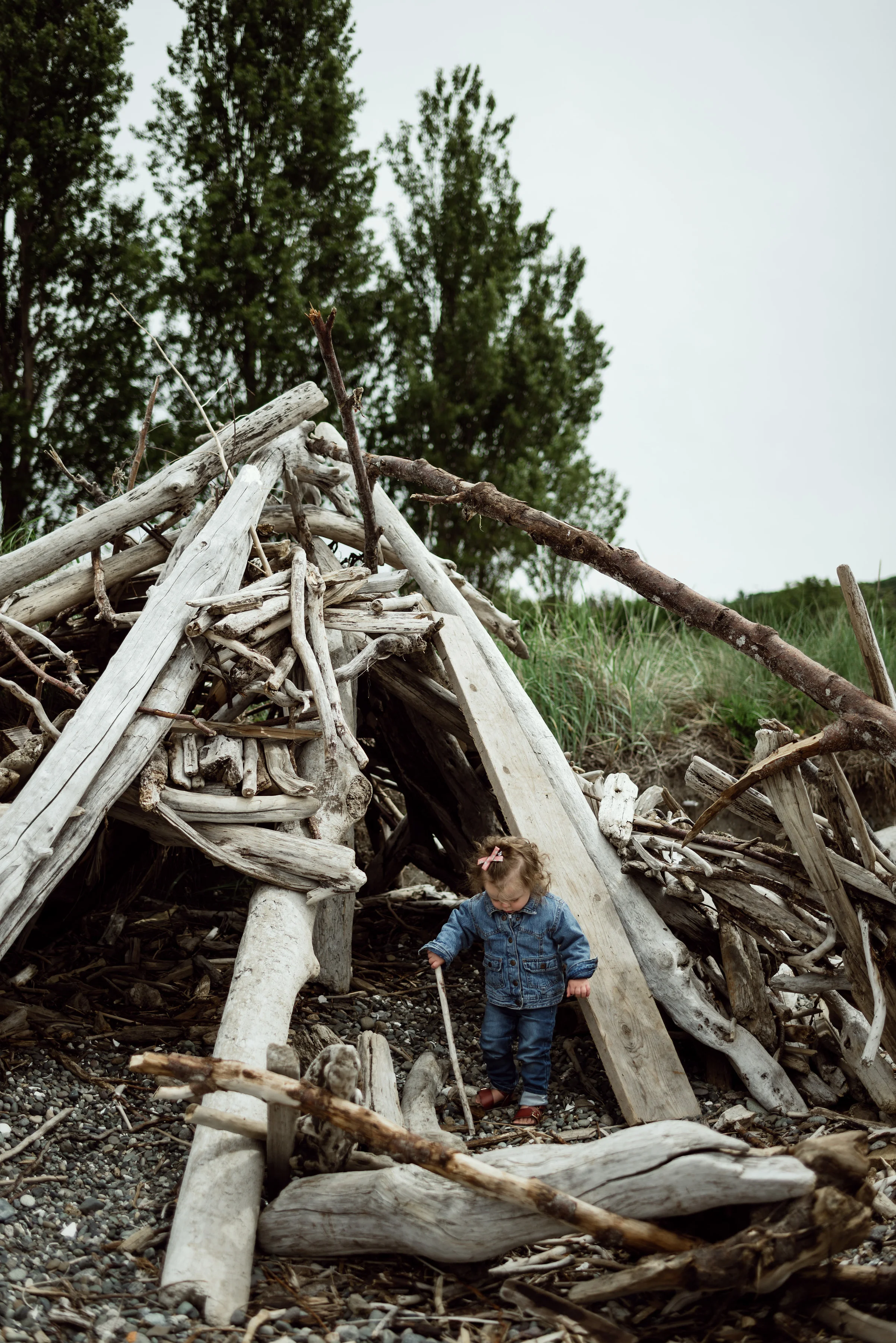
“Don’t think about why you question, simply don’t stop questioning. Don’t worry about what you can’t answer, and don’t try to explain what you can’t know. Curiosity is its own reason, aren’t you in awe when you contemplate the mysteries of eternity, of life of the marvelous structure behind reality?
And this is the miracle of the human mind - to use its constructions, concepts, and formulas as tools to explain what man sees, feels and touches. Try to comprehend a little more each day. Have holy curiosity.”
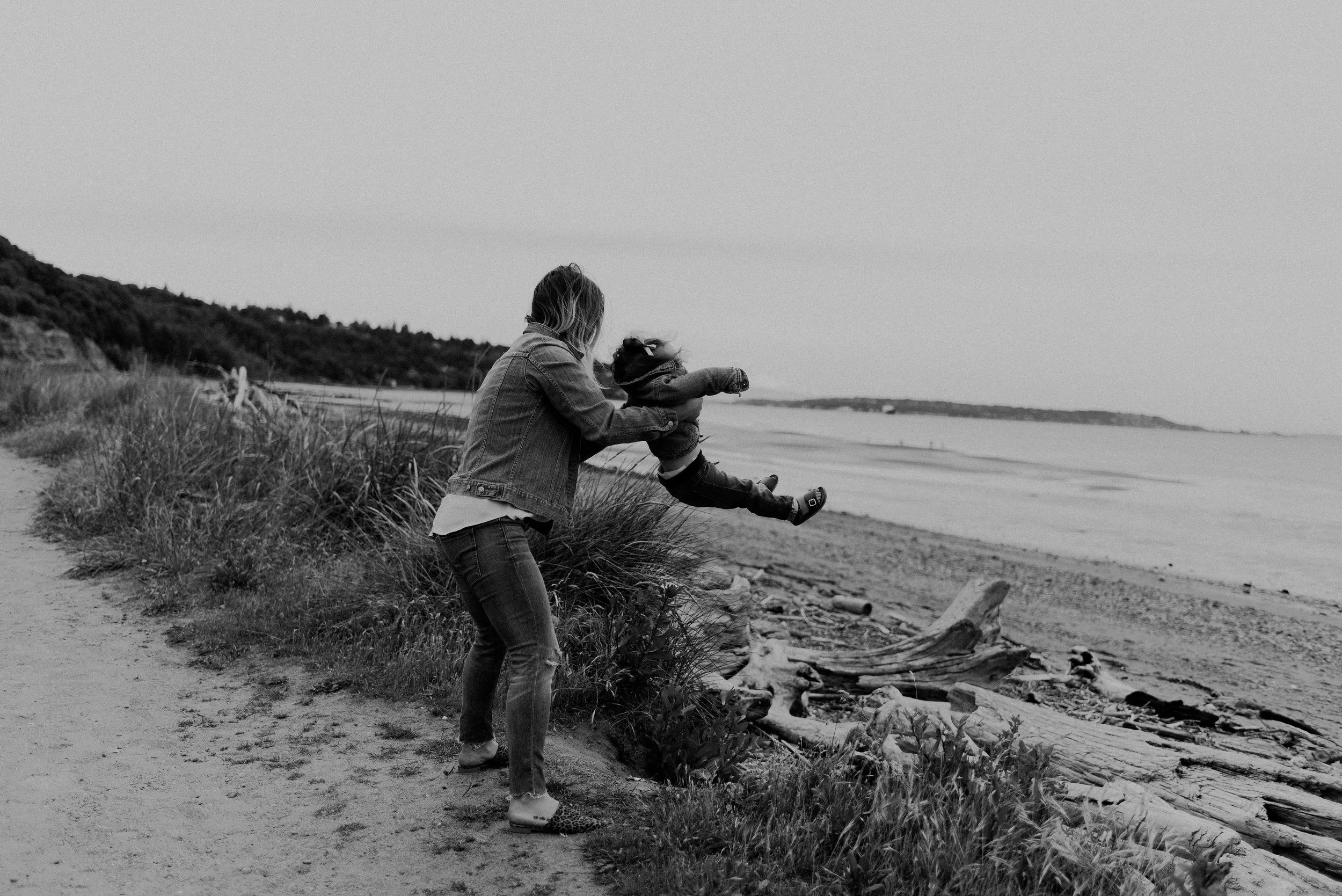
That’s one of the reasons I absolutely love kids: they’re constantly asking why, trying to make sense of the world (you parents constantly bombarded with questions may find them less charming!). Why do some people say yes when they mean no? Why do we do what we do and say what we say? Why is the sky blue and why is steel strong and why can’t we just write checks to pay for everything?
Bottom line: Curiosity rules. Don’t think so?

xx,
-w-
YOU C A N SIT WITH US

Images by Brooke Richardson Photography
“It really boils down to this: that all life is interrelated. We are all caught in an inescapable network of mutuality, tied into a single garment of destiny. Whatever affects one destiny, affects all indirectly.”
A friend and I were talking recently about her neighbors' kids knocking on the door daily to ask her boys to play. She added they were even great about playing with her youngest. It struck me how social relations are so much easier with kids! Their line of reasoning seems to be, "You're a kid. I'm a kid. Let's hang!" That's it. Simple as that. Sure, you have the occasional outliers and bullies (which can often be traced to the socialization they're receiving and behavior they're observing at home/elsewhere).

Somehow along the way, as we grow up, it becomes more complicated. We have less perceived commonality and willingness to overlook differences. Sure, there could be many contributing factors (e.g. as we grow older we identify and develop our specific talents and interests and socialize accordingly; we have less free time due to jobs and other obligations, so we're pickier with whom we spend our limited time, etc).
Whatever the reasons may be, you have to admit a kid can more seamlessly join a table of kids coloring than an adult can blend into a group of strangers chatting at a cafe. I mean, think about it! If a stranger walked up to you and your friends and was all, "Hey, whatcha guys talking about? Ooh I lovvvve yoga classes too!!! What's your fave, Bikram or meditative? GET OUT - that's my fave too!!!!!!!" Chances are, you'd look at them like, "Girl, you WACK."
“Become friends with people who aren’t your age. Hang out with people whose first language isn’t the same as yours. Get to know someone who doesn’t come from your social class. This is how you see the world. This is how you grow.”
It seems the older we get, the more our differences are heightened and emphasized, and the more our commonalities are minimized and disregarded. As kids, we weren't yet jaded by the world. We had no awareness of social constructs like status and prestige. We had open minds and hearts. We were untouched by societal ideals and concepts of what's acceptable and what's not; what's cool and what's not; what's sexy and what's not. We just woke up psyched to play. Our main focus was having as much fun as possible each and every day. Sounds like a solid approach to me!
“That’s the real trouble with the world, too many people grow up.”
Let's all try to be open minded with others. This doesn't mean you need to become BFFFFFs with every single person you meet. That'd be waaayyyy too many birthday presents to buy (JUST KIDDINGGGG). And if you have social anxiety, or you're an introvert - striking up a conversation with a stranger might not be your jam. Maybe just focus on your thoughts, staying as open-minded and non-judgmental as possible with others. Focus on your similarities and common interests.

Let's all just get along!
Peace and blessings, homies.
-w-