L A B E L S
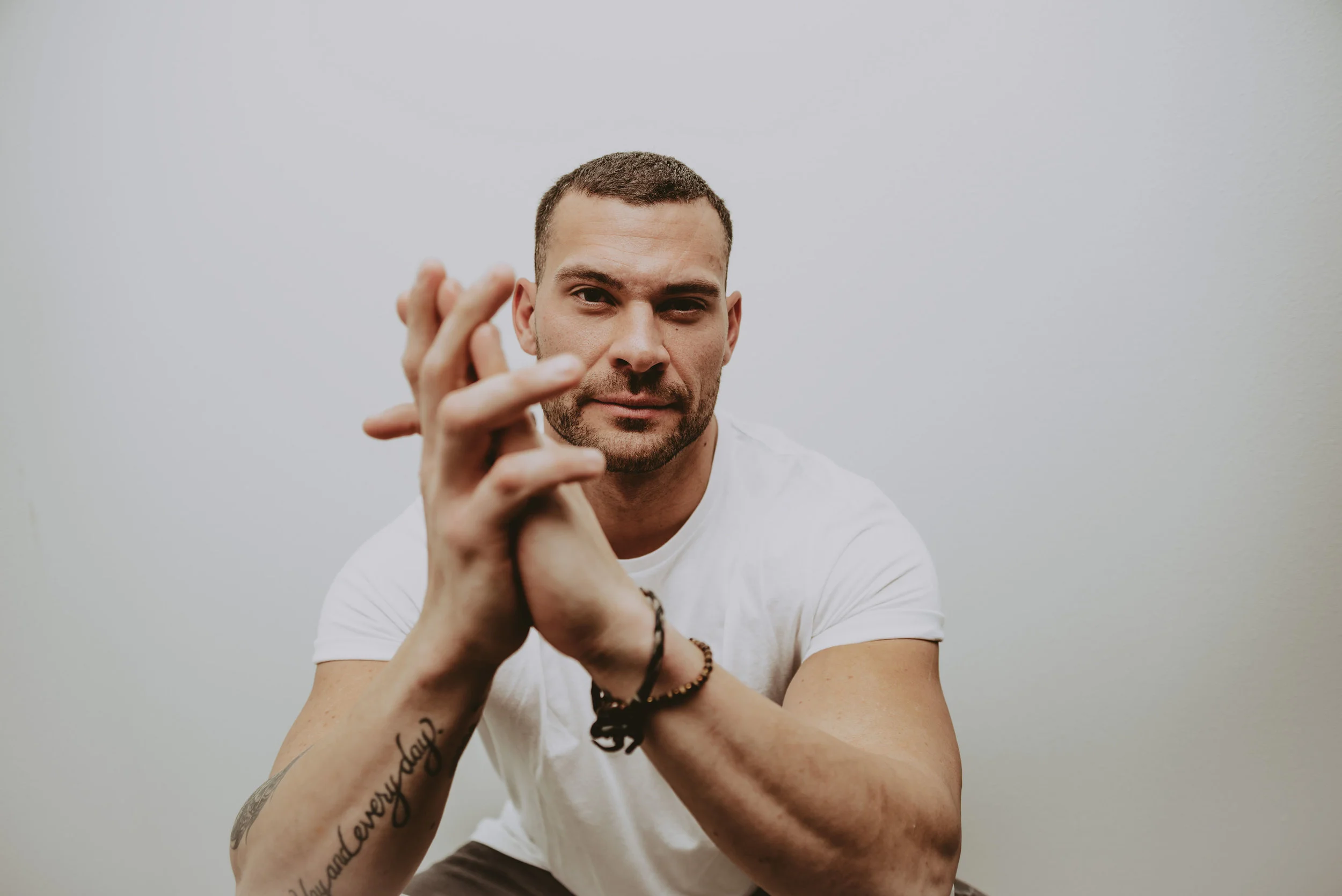
Model: Byron Hunt; Photography by me
“When you call yourself an Indian or a Muslim or a Christian or a European, or anything else, you are being violent. Do you see why it is violent? Because you are separating yourself from the rest of mankind. When you separate yourself by belief or nationality, by tradition, it breeds violence. So a man who is seeking to understand violence does not belong to any country, to any religion, to any political party or partial system; he is concerned with the total understanding of mankind.”
Would you agree with me that we typically feel compelled to label: people, items, emotions, experiences, ideas…pretty much everything!
Sure, there’s value in labeling. That’s how we’re able to know what the hell we’re referencing. Otherwise, our convos would take twice as long trying to describe what we’re referring to, and it’d all be one continuous scene of The Little Mermaid (“Whozits and whatzits galore. You want thingamabobs? I’ve got 20!”). Obnoxious and frustrating to the max.
Labels are part of our culture - in every sense of the word (personal, professional, legislative, judicial, pop culture, music, etc). They contribute to the infrastructure upon which society is built, upon which laws are passed, upon which food is sorted and Netflix is categorized. When I’m browsing for new jams, I don’t want to have to scroll through a shi* ton of random opera ballads to get to my preferred music.
Labels make our lives easier and more efficient. They allow our brains and bodies to navigate through life more effectively amid the onslaught of information we’re blasted with every second of every day. They help us make sense of the world, with all of its complexities.
They also can bestow us with a common purpose. It can offer a sense of belonging/pride/commonality/community, particularly in the case of nationality/cultural identity/etc. It can provide a cause/entity to cheer for, a common point to rally around. They give us traditions, and opportunities to connect with other similar people.
However…
These benefits (efficiency, simplicity, community, pride, etc), can come at a price.
It can become problematic/limiting/divisive/misleading/self-defeating when we apply this labeling compulsion with no consciousness, awareness, flexibility, or fluidity. When we tattoo those labels, so to speak, making them costly, painful, and time-intensive to remove (I really took that tattoo metaphor and ran with it, didn’t I?). Labels can also mask our universal commonalities and pit us against the “outsiders.”
Society values clarity and decisiveness. We’re prompted to label people as good or bad, right or wrong, successful or non; same goes for ideas, etc.
This dichotomous and limited way of thinking doesn’t account for complexities: within individuals, within groups, within the world in general. People do good things. People do bad things. Life isn’t always black and white.
And I want to live in a world where people’s gender/race/skin color are irrelevant. Just because I may be regarded as a privileged white woman doesn’t mean I’m not allowed an opinion or a say or a hope for a more inclusive world.
Furthermore, it limits our growth and happiness, and clouds our view, when we apply labels to ourselves! Particularly regarding our identities. We’re conditioned to establish our identities on factors such as our skin color, our profession, our IQ level, our prevailing temperament, our body type, our gender, our music taste, our religion, our political affiliation. Lawd help us if we step outside our established identity: a straight male shaking it at Zumba, a Republican voting for a Democrat, a bodybuilder loving the ballet, a grandma digging Metallica.

It’s easy to feel locked into a label and feel pressured to maintain that image. For example, men in certain cultures (looking at you, ‘Murica) are typically discouraged from expressing emotion - especially in the military. To cry is considered weak and “sissy la la.” What kind of bullshit is that?! Think about it: They are discouraged from expressing HUMAN EMOTION.
I’ve previously discussed the dangers of emotion repression, and the takeaway is: it ain’t good. Those emotions don’t just disappear into the ether - they fester and make their way out eventually and demand to be addressed.
Former Army Special Forces Green Beret Greg Stube acknowledges this in his stellar book, Conquer Anything: A Green Beret’s Guide to Building Your A-Team. He was fully indoctrinated in the masculine military, “rub some dirt on it” (he actually uses those words) mentality…until he almost died in Operation Medusa in Afghanistan in 2006. He was finally forced to grapple with what it means to be human, to be complete, and to be truly strong: mentally, physically, and emotionally. Having repressed that facet of being human for so long, he was knocked for a total loop when he was blown to smithereens by an IED (improvised explosive device) and forced to accept a very different reality, one in which he couldn’t just rub some dirt on it and soldier on. Through soul searching, reflection, and personal “come to Jesus” talks, he came out on top - and acknowledged the importance of transcending certain labels to embrace and cultivate what it means to be human, and what it means to be truly strong.
So what happens when something happens and the label no longer fits?
We get fired. We go bankrupt. We get voted out. We get sick. We flunk a test. We gain/lose weight. We experience an existential criss that triggers re-evaluation of our priorities/affiliations/beliefs.
Like Greg Stube experienced, it can be devastating, if your identity is tethered to that label. Suddenly you start wondering who you really are, if not your label(s). If I’m not a high-powered lawyer/straight-A brainiac/size 0/Christian/president/husband/etc, who am I? What’s my place in the world? What do I have to offer? Am I still worth loving? So many of us feel conditionally loved, whether we realize it or not. We’re led to think (sometimes intentionally, sometimes unintentionally) that we are accepted/loved because of those labels: doctor/Mormon/star athlete/parent/do-it-yourselfer/subject matter expert.

This also applies to emotions. Let’s say you’re known as the carefree, happy, optimistic one. The one who sprinkles sunshine wherever you go and elevates the mood in any situation. You’ve learned to effectively play this role. But what happens when you have a bad day? Or even a bad year? Are you supposed to deny yourself feeling those “negative” emotions?
“When you welcome your emotions as teachers, every emotion brings good news, even the ones that are painful.”
What you resist, persists.
“Feelings like disappointment, embarrassment, irritation, resentment, anger, jealousy, and fear, instead of being bad news, are actually very clear moments that teach us where it is that we’re holding back. They teach us to perk up and lean in when we feel we’d rather collapse and back away. They’re like messengers that show us, with terrifying clarity, exactly where we’re stuck. This very moment is the perfect teacher, and lucky for us, it’s with us wherever we are. ”
Which leads us to emotion labeling. Emotions aren’t positive or negative; emotions are emotions. Emotions are natural and wide-ranging, and most importantly: emotions are messengers. They come and they go, so we should let them move through us, view them with curiosity and no attachment, and discern their message. By denying/ignoring/repressing them, you are stunting your growth, preventing your freedom, and blocking true happiness.
“Feel the feeling but don’t become the emotion. Witness it. Allow it. Release it.”
Ultimately, as the opening quote indicates, labels separate: us from each other, us from ourselves (our true essences). While they do serve a purpose, it is crucial for us to be aware of them and fluid in our allegiance to them. As long as we interpret them loosely and keep an open mind, we’ll all be better off.
xx,
-w-
“Once you label me, you negate me.”